


Why Soil Testing Is The First Step Towards Profitable Farming
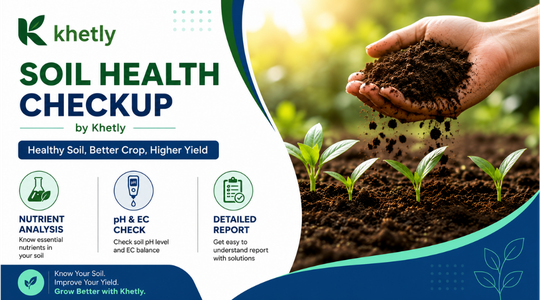
Why Soil Testing Is the First Step Towards Profitable Farming
India is home to more than 14 crore farmer households, yet only a small proportion of farmers regularly test their soil before planning nutrient management. Although the Soil Health Card programme has reached millions of farmers, routine soil testing is still not a common farming practice in many parts of the country.
Just as doctors recommend blood tests before prescribing medicines, soil should also be tested before applying fertilizers. No doctor prescribes treatment without understanding what is happening inside the human body. Similarly, applying fertilizers without knowing the condition of the soil is nothing more than guesswork.
Unfortunately, many farmers still decide fertilizer doses based on experience, neighbouring farms, or traditional practices instead of actual soil nutrient status. As a result, some nutrients are applied in excess while others remain deficient. This not only increases cultivation costs but also reduces fertilizer efficiency and crop productivity.
Over the past few decades, the continuous and imbalanced use of chemical fertilizers, along with repeated pesticide applications and declining use of organic matter, has gradually affected soil health in many agricultural regions. Studies based on India's Soil Health Card programme have also highlighted widespread deficiencies of key nutrients and low organic carbon levels in many soils.
Healthy soil is a living ecosystem. It contains beneficial microorganisms, organic matter, essential nutrients, moisture, and a balanced soil structure that together support healthy crop growth. When soil health declines, crops require higher fertilizer inputs to produce the same yield, production costs increase, and long-term productivity starts declining.
Ignoring soil testing year after year can lead to nutrient imbalance, reduced microbial activity, lower organic carbon, poor water-holding capacity, and declining soil fertility. If corrective measures are not taken in time, agricultural land may gradually lose its productive capacity, making profitable farming increasingly difficult.
Soil testing is therefore not an expense—it is an investment. A simple soil test helps farmers understand the nutrient status of their fields, apply the right fertilizer in the right quantity, improve fertilizer-use efficiency, reduce unnecessary input costs, and protect soil health for future generations.
At Khetly, we believe that healthy soil is the foundation of sustainable and profitable farming. Every successful crop begins with understanding the soil beneath it.
Khetly Initiative: Building a Soil-Healthy Future for Indian Farmers
At Khetly, we believe that healthy soil is the foundation of profitable farming. Our mission is not only to provide agricultural information but also to create awareness about the importance of soil health across India.
Over the next two years, Khetly Kisan Agri App aims to educate thousands of farmers on how to collect soil samples correctly, understand soil test reports, and apply fertilizers based on scientific recommendations instead of guesswork.
As part of this initiative, Khetly has set a goal to help facilitate more than 50,000 soil tests by connecting farmers with the right knowledge, guidance, and soil testing services.
Because the future of Indian agriculture does not depend on applying more fertilizer—it depends on understanding the soil beneath our feet.
Healthy Soil. Healthy Crops. Prosperous Farmers.
Khetly Kisan Agri App – Khetly, Kisan Ni Sathe.